
Islamic Bio for Instagram: Urdu Written in English (Roman Urdu)
Not everyone types in Urdu script, but that doesn’t mean the feeling behind an Urdu line has to be lost. Roman Urdu — Urdu words spelled out using English letters — has become one of the most popular ways for Muslims
to express faith on Instagram, especially for those who read and write more comfortably in English but still want their bio to carry that unmistakable Urdu warmth.
This guide brings together faith-based Islamic bio ideas written in Roman Urdu, along with their English meanings, formatting tips,
and the reasoning behind why this style has become so widely used. Whether you’re a brother, a sister, or just looking for something short and sincere, you’ll find a style here that fits.
What Is a Roman Urdu Islamic Bio?
A Roman Urdu Islamic bio is a faith-based Instagram bio written in Urdu, but spelled out using the English alphabet instead of Urdu script. Instead of writing “اللہ کا شکر ہے,” it’s written as “Allah ka shukar hai” — same words, same meaning, just typed in letters most keyboards already support.
This style sits comfortably between two worlds: the emotional depth of Urdu and the everyday convenience of English typing. It’s especially common among younger Muslims, second-generation immigrants, and anyone who grew up speaking Urdu at home but typing primarily in English.
| Feature | Urdu Script Bio | Roman Urdu Bio |
|---|---|---|
| Script used | Urdu/Nastaliq script (اردو) | English/Latin letters |
| Typing ease | Requires an Urdu keyboard or app | Types easily on any standard keyboard |
| Readability | Best for fluent Urdu readers | Readable by Urdu speakers who don’t read the script |
| Common audience | Urdu-literate followers | Wider audience, including diaspora and younger users |
| Typical use | Traditional, poetic bios | Casual, everyday devotional bios |
Why Roman Urdu Islamic Bios Are So Popular
A few clear reasons explain why this style shows up across so many Muslim profiles:
- It’s easier to type. Most phones default to English keyboards, making Roman Urdu far quicker to type than switching to an Urdu keyboard.
- It reaches a wider audience. Followers who speak Urdu but never learned to read the script can still understand it instantly.
- It feels personal and familiar. For many, Urdu is the language of home, family, and everyday conversation — writing in Roman Urdu keeps that emotional connection intact.
- It blends naturally with English. Since the bio is already in Latin letters, it’s easy to mix in English words, emojis, or Arabic phrases within the same line.
- It’s common across the diaspora. For Muslims living outside South Asia, Roman Urdu is often the most natural way to write in their mother tongue.
How to Write a Roman Urdu Islamic Bio
A few tips help make sure your Roman Urdu bio reads clearly and feels genuine.
- Spell phonetically, not literally. Roman Urdu doesn’t have one fixed spelling system — write words the way they sound, since that’s how most readers will recognize them.
- Keep it short. Two to four lines is plenty, especially with Instagram’s 150-character limit.
- Mix Roman Urdu with English naturally. Many of the most popular bios blend both — a Roman Urdu line followed by a short English phrase reads very naturally.
- Use Arabic phrases sparingly and sincerely. Words like “Alhamdulillah” or “InshaAllah” work well within Roman Urdu bios, since they’re already widely recognized regardless of script.
- Add a personal touch. A nickname, hobby, or goal alongside your faith-based line makes the bio feel like a real reflection of you.
Faith-Based Roman Urdu Islamic Bios
Sincere lines expressing devotion and trust in Allah, written in Roman Urdu with their English meaning alongside.
| Roman Urdu | English Meaning |
|---|---|
| Allah ka shukar hai har cheez ka. | Grateful to Allah for everything. |
| Meri manzil sirf Allah ki raza hai. | My destination is only Allah’s pleasure. |
| Sabr aur shukar, yehi meri zindagi hai. | Patience and gratitude, that’s my life. |
| Dil sirf Allah ke zikr se sukoon paata hai. | My heart finds peace only in remembering Allah. |
| Har mushkil ke baad, Allah ki madad zaroor aati hai. | After every hardship, Allah’s help surely comes. |
| Meri pehchan sirf ek Musalman hone mein hai. | My identity lies only in being a Muslim. |
| Allah pe bharosa, sab theek ho jayega. | Trust in Allah; everything will be fine. |
| Deen mera raasta, Quran meri roshni. | Deen is my path, Quran is my light. |
| Namaz mera sukoon, Allah meri taqat. | Prayer is my peace, Allah is my strength. |
| Zindagi mushkil hai, par Allah ke saath aasaan hai. | Life is hard, but easy with Allah. |
Attitude + Faith Roman Urdu Bios
A blend of confidence and devotion — one of the most widely used styles among younger Muslims writing in Roman Urdu.
- Simple soch, mazboot iman.
- Dunya se nahi darta, sirf Allah se darta hoon.
- Apna raasta khud banata hoon, Allah ke bharose.
- Chup rehna aata hai, jhukna nahi.
- Deen pe chalta hoon, dikhawe pe nahi.
- Mera style simple, mera iman strong.
- Halaat badal sakte hain, mera imaan nahi.
- Jitna zyada azmaya gaya, utna zyada mazboot hua.
- Sirf Allah ke aage jhukta hoon, aur kisi ke nahi.
- Saadgi pasand hai, par soch buland hai.
Short Roman Urdu Islamic Bios
For a clean, minimal profile, these one-line bios say a lot in very few words.
| Roman Urdu | English Meaning |
|---|---|
| Bas Allah kaafi hai. | Allah alone is enough. |
| Shukar hamesha. | Gratitude, always. |
| Deen pehle. | Deen comes first. |
| Musalman hone pe fakhr hai. | Proud to be Muslim. |
| Sirf Allah ka bharosa. | Trust in Allah alone. |
| Sabr karo, Allah dekh raha hai. | Be patient, Allah is watching. |
| Namaz, sukoon ka raaz. | Prayer, the secret to peace. |
| Iman mazboot, dil sakoon se bhara. | Strong faith, a heart full of peace. |
Roman Urdu Islamic Bios for Brothers
A confident, grounded tone that reflects both character and faith.
- Mard woh nahi jo lade, mard woh hai jo Allah se darta hai.
- Mehnat karta hoon, natija Allah pe chhodta hoon.
- Deen mera character banata hai, sirf label nahi.
- Zimmedariyan nibhata hoon, Allah ke bharose se.
- Kamzor waqt mein bhi, Allah ka shukar nahi chhodta.
- Simple zindagi, sacha iman.
- Har roz behtar banne ki koshish, Allah ki madad se.
- Ghussa kam, sabr zyada, yehi meri pehchan hai.
- Mushkil waqt mein bhi, Allah pe yakeen kam nahi hota.
- Duniya dikhawe ki, main sirf Allah ke liye.
Roman Urdu Islamic Bios for Sisters
A gentle, sincere tone reflecting modesty, grace, and quiet strength.
- Hijab meri shaan, iman meri pehchan.
- Saadgi mein khoobsurati, deen mein sukoon.
- Chup rehna aata hai, par iman kamzor nahi.
- Allah ka banda hoon, iske alawa kuch nahi chahiye.
- Dil naram, iman mazboot.
- Har namaz ke baad dil halka ho jata hai.
- Deen se pyar, dunya se sabar.
- Maa ki dua, Allah ki rehmat, yehi mera sahara hai.
- Khamoshi meri pehchan, sabar meri taqat.
- Har haal mein shukar guzar rehti hoon.
Common Arabic Phrases Used in Roman Urdu Bios
Many Roman Urdu bios naturally include short Arabic phrases, since these are widely recognized regardless of script. Knowing their meaning helps you use them with sincerity.
| Phrase | Meaning | Common Use |
|---|---|---|
| Alhamdulillah | All praise is due to Allah | Expressing gratitude |
| MashaAllah | What Allah has willed | Appreciating a blessing |
| InshaAllah | God willing | Expressing hope for the future |
| SubhanAllah | Glory be to Allah | Expressing awe or wonder |
| Astaghfirullah | I seek forgiveness from Allah | Expressing regret or self-correction |
| JazakAllah Khair | May Allah reward you with good | A common alternative to “thank you” |
Pairing one of these with a Roman Urdu line — for example, “Alhamdulillah, zindagi khoobsurat hai” — is one of the most common and natural combinations used in bios today.
Why This Search Term Is So Common
“Islamic bio for Instagram Urdu in English” is searched constantly because it sits at the intersection of two real needs: wanting a bio that feels rooted in Urdu and faith, but typed in a way that doesn’t require switching keyboards or learning a script.
This is especially true for Urdu speakers living outside South Asia, or younger users who grew up hearing Urdu at home but reading and writing mostly in English.
Unlike a generic “Islamic bio” search, this specific phrasing signals someone who already knows exactly what tone they want — they just need the right words, spelled in a way they can actually type and read comfortably.
Roman Urdu Bio Style Comparison
Choosing the right style depends on the tone you want your bio to carry.
| Bio Style | Best For | Typical Tone |
|---|---|---|
| Faith-Based | Clear, sincere expressions of devotion | Calm, heartfelt |
| Attitude + Faith | Younger Muslims blending confidence with deen | Bold, modern |
| Short/One-line | Minimal, clean profiles | Direct, simple |
| Brothers’ Bios | A grounded, character-focused tone | Confident, humble |
| Sisters’ Bios | A soft tone reflecting modesty and grace | Gentle, sincere |
Biodata-Style Roman Urdu Islamic Bios
A structured, line-by-line format that mixes personal details with faith, popular for a scannable, card-like bio.
☪️ Musalman
👉 Naam: [Your Name]
🎂 Janamdin: [Date]
🤲 Iman: Allah pe bharosa
📖 Manzil: Jannah
🌙 Soch: Shukar guzar
🕋 Bismillah se shuru
👉 [Your Name]
🎂 [Date]
🔥 Attitude: Deen-focused
☪️ Pehchan: Musalman hone pe fakhr
🌙 Vibe: Sakoon aur sabar
This format works well because it lets you share real details about yourself while keeping the devotional tone present throughout.
Formatting Tips for Roman Urdu Bios
A well-formatted bio reads more clearly and feels more intentional, even within Instagram’s limited character space.
- Keep spelling consistent within your own bio. Roman Urdu doesn’t have one official spelling system, so pick a version of each word and stick with it across your bio.
- Use emojis with purpose. A crescent moon (☪️), praying hands (🤲), or Kaaba (🕋) pairs naturally with Roman Urdu devotional lines.
- Don’t overcrowd with English translations. If your audience mostly understands Urdu, you don’t need to translate every line — save that for phrases that might not be widely understood.
- Test readability. Read your bio out loud. If it sounds natural when spoken, it usually reads naturally too.
Instagram Character Limit and Roman Urdu Bios
Instagram bios are capped at 150 characters, including spaces and emojis. Roman Urdu phrases often run a bit longer than their English equivalents, so it’s worth keeping an eye on length as you build your bio.
| Element | Approximate Character Cost |
|---|---|
| Short Roman Urdu phrase (e.g., “Shukar hamesha.”) | 15–20 characters |
| Medium devotional line (e.g., “Allah pe bharosa, sab theek ho jayega.”) | 38–42 characters |
| Emoji | 1–2 characters |
| Arabic phrase in Roman letters (e.g., “Alhamdulillah”) | 13–14 characters |
If your bio doesn’t fit, trimming to one strong Roman Urdu line plus a short Arabic phrase usually works better than cramming in multiple long sentences.
Common Mistakes to Avoid
- Overcomplicating the spelling. Roman Urdu should sound natural when read aloud — don’t overthink exact letter combinations.
- Mixing too many languages at once. Blending Roman Urdu, English, and Arabic all in one short bio can feel cluttered rather than meaningful.
- Using sacred phrases without sincerity. Words like “Alhamdulillah” carry real weight — use them thoughtfully, not just as filler.
- Copying someone else’s bio exactly. Drawing inspiration is fine, but a personal tweak makes the bio feel authentically yours.
- Ignoring the character limit. Instagram bios cap at 150 characters, so longer Roman Urdu phrases need short, simple surrounding text.
- Assuming everyone reads Roman Urdu easily. If your audience is diverse, pairing key lines with a short English meaning helps the sentiment reach everyone.
Quick Recap: Choosing Your Roman Urdu Islamic Bio
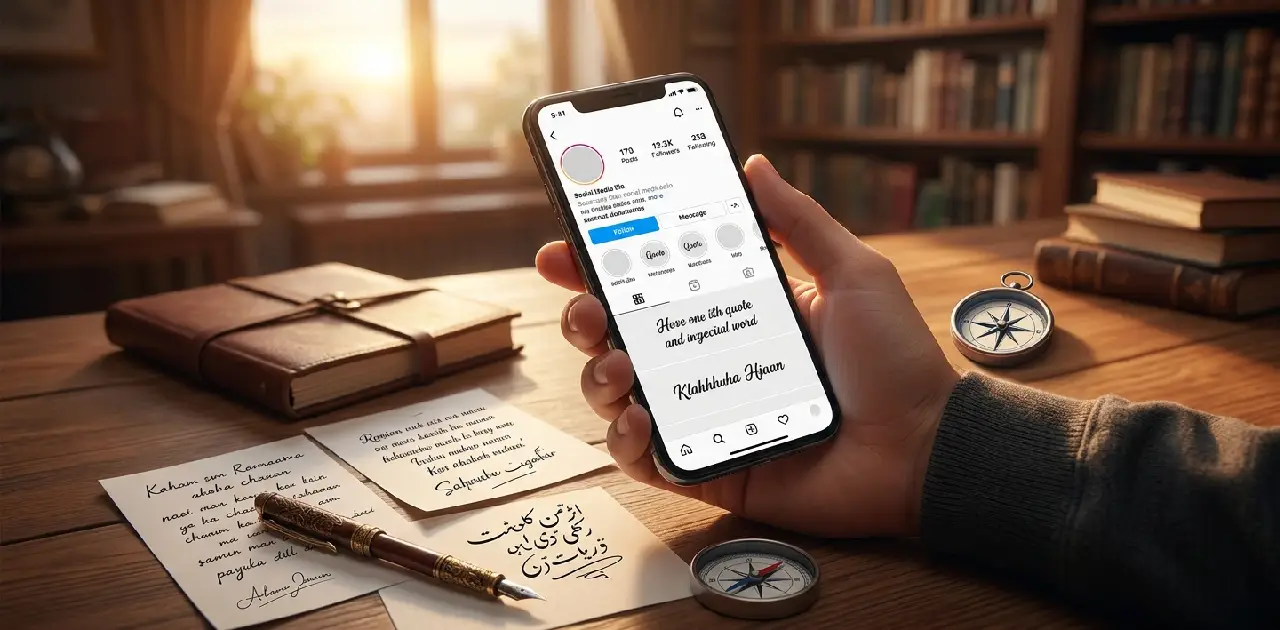
- Want pure devotion? Choose a faith-based Roman Urdu line.
- Want confidence with your faith? Go with an attitude-plus-deen style.
- Prefer something minimal? A short one-line bio works well.
- Want to share personal details too? Try a biodata-style format.
- Writing as a brother or sister? Use the dedicated categories for the right tone.
- Want to include Arabic phrases? Pair them naturally within your Roman Urdu line.
Conclusion
A Roman Urdu Islamic bio brings together two things that matter deeply to a lot of Muslims — the emotional warmth of Urdu and the everyday practicality of typing in English.
Whether you lean toward a sincere devotional line, a confident attitude-plus-faith style, or a short and simple phrase, Roman Urdu lets your bio feel personal without needing a separate keyboard or script.
Use the ideas in this guide as a starting point, adjust the spelling and wording until it genuinely sounds like you, and don’t hesitate to mix in English or Arabic where it feels natural.
A bio written with real sincerity will always connect more than one copied word-for-word from somewhere else.
FAQs
What is a Roman Urdu Islamic bio?
It’s a faith-based Instagram bio written in Urdu, but spelled using English letters instead of Urdu script.
Why do people prefer Roman Urdu over Urdu script for bios?
Roman Urdu is easier to type on standard keyboards and is readable by Urdu speakers who don’t read the script fluently.
Can I mix English and Roman Urdu in the same bio?
Yes, mixing both is extremely common and often reads more naturally than sticking to just one.
What does “Allah ka shukar hai” mean?
It means “grateful to Allah,” a common phrase used to express thankfulness in Roman Urdu bios.
Is there one correct way to spell Roman Urdu words?
No, Roman Urdu doesn’t follow a single fixed spelling system — words are spelled phonetically based on how they sound.
Can I use Arabic phrases in a Roman Urdu bio?
Yes, phrases like “Alhamdulillah” or “InshaAllah” blend naturally into Roman Urdu bios and are widely understood.
1 comment